Direct answer: Yes — when structured as weekly, live practice with immediate feedback, coaching helps service advisors form repeatable behaviors that improve walkarounds, repair-order detail, customer conversations, and ultimately the department’s effective labor rate.
This article reframes the problem of short-lived training spikes into a practical plan for habit change. Instead of one-off seminars or passive modules, live coaching creates a predictable loop: practice, feedback, adjust, and apply the change on the drive the same day. That loop converts new techniques into dependable routines that protect margin and keep technicians billable.
Top takeaways at a glance
- Ongoing accountability: Weekly live sessions sustain momentum long after a workshop ends.
- Repeatable walkarounds: A simple step sequence performed with every customer reduces missed opportunities.
- Clearer repair orders: Structured write-ups cut diagnostic time and boost technician billable hours.
- Stronger margins: Confident recommendations and less panic discounting protect effective labor rates.
Why weekly live coaching works better than one-time events
Dealerships routinely spend on weekend training only to see new behaviors fade within days. One-off seminars deliver a temporary motivation spike, but they lack the repeated practice and real-time corrections needed to rewire daily habits.
Industry finance sources underline the stakes: fixed operations produce a substantial portion of dealership gross profit (see NADA Data). Protecting that revenue stream requires consistent application, not sporadic inspiration.
How practice frequency shapes retention
Learning models and on-the-job behavior change point to repetition and immediate feedback as the drivers of lasting improvement. Weekly live coaching provides both: a predictable practice cadence and corrections that take effect the same day on the service drive.
Compare training approaches
The differences are most clear when you compare frequency, feedback, and long-term results.
| Training approach | Practice frequency | Real-time feedback | Retention & business impact |
|---|---|---|---|
| One-time seminars | Single weekend event | None after the event | Behaviour often fades within ~14 days; temporary execution spike |
| Passive video modules | Self-paced | No live interaction | Varies by participant; typically low engagement and completion |
| SDR Live weekly coaching | Every week | Immediate, live corrections | Higher, sustainable growth; consistent habits and stronger labor margins |
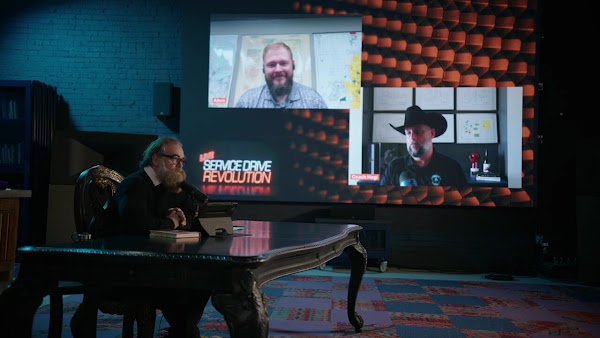
In practice, effective weekly sessions use real customer scenarios from that morning’s drive, run targeted roleplays, and immediately apply refinements with live customers later the same day. For roleplay examples and training breakdowns, see the Chris Collins Inc YouTube Channel.
Standardizing the service-drive walkaround
A common failure point is skipping the walkaround to speed up paperwork. When that happens, advisors miss visible maintenance cues — tires, wipers, battery age, or fluid conditions — that can be identified together with the owner.
A three-step walkaround routine coaches should enforce
- Joint inspection: Walk the vehicle with the owner, pointing out tire tread, battery condition, and exterior signs while still at the vehicle.
- Mileage check: Confirm odometer readings and match them to manufacturer maintenance intervals while standing next to the car.
- Set expectations: Agree on completion times and contact preferences before taking the customer into the office to sign the initial repair order.
Repeating this short sequence every customer interaction turns the walkaround from a skipped step into a trust-building ritual, which makes secondary recommendations easier to present after the technician’s multi-point inspection completes.
How clearer repair orders free up technicians
Vague advisor notes delay diagnosis and reduce billable time. A single ambiguous line can force a technician to hunt for the symptom instead of working on repairs, eroding shop capacity and margins.
Examples of write-ups
- Vague write-up: “Customer states noise in front.”
- Accurate, structured write-up: “Squeak from the front left wheel when braking at 25 mph over bumps.”
Clear, specific write-ups give technicians an immediate diagnostic focus, leading to faster turnarounds and higher billable hours. The complexity of modern vehicle systems only increases this need — see employment and industry context at the U.S. Bureau of Labor Statistics.
Coaching advisors to ask targeted diagnostic questions during check-in means repair orders arrive in the shop with actionable detail rather than ambiguous notes, keeping technicians working on repairs instead of seeking clarifications.
Dealership groups seeking tailored leadership and execution support can review Signature Coaching Services and program options.
How habit change defends effective labor rates
Routine coaching helps advisors present labor value confidently instead of conceding to early discounting or providing bundled quotes that obscure labor value. These behaviors directly erode department margins.
Two counterproductive habits weekly coaching targets
- Panic discounting: Reducing labor fees at the first sign of hesitation rather than explaining the technician expertise and tooling behind the estimate.
- Lumping labor and parts: Quoting an all-in price without breaking out labor can make the estimate feel arbitrary and easier to question.
When advisors consistently follow a labor matrix and clearly articulate the benefits of factory-certified technicians, customers are more likely to accept recommendations without demanding price cuts. Learn more about how SDR Live Academy improves service advisor performance for program specifics.
Frequently asked questions
How long until I see real habit change from live coaching?
Most advisors start to show noticeable changes within about three to four weeks of consistent weekly sessions. Broader performance metrics and stable behavioral shifts tend to coalesce over roughly a 90-day period.
How much time should an advisor expect to commit weekly?
Typical coaching designs require about one hour per week and are arranged to minimize disruption to daily drive operations while still enabling meaningful practice and feedback.
Can live coaching improve advisor retention?
Yes. Advisors who receive regular coaching often experience reduced day-to-day stress, clearer communication frameworks, and better sales performance — factors that contribute to higher job satisfaction and lower turnover.
For a complete program road map that pairs advisor playbooks with leadership development, see the SDR Live Academy complete fixed-ops training guide.
Conclusion
Turning occasional training into weekly, live practice changes how service drives operate. Consistent coaching embeds simple, repeatable routines — walkarounds, precise repair-order write-ups, and confident price presentation — that raise effective labor rates and improve customer trust. To explore live coaching schedules and next steps for your team, review the SDR Live Academy offerings today.
Related reading on magicvibes.co: Bad Credit Car Loans in Washington: How to Get Approved, Protect Your Rights, and Drive Home Confidently; Can You Truly Reclaim Your Agency and Your Power of Choice?.